
Who is Leonard Cohen?
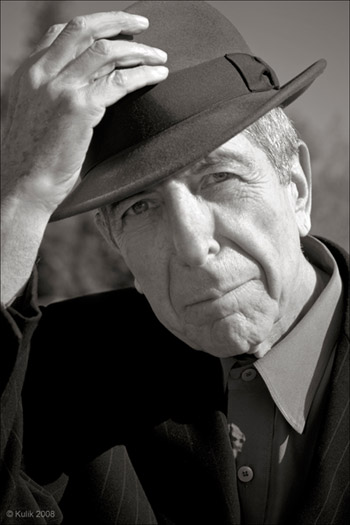
Leonard Cohen (1934-2016) was a Canadian poet, singer-songwriter and novelist. His music, lyrics and books, which have been read by generations of readers, are admired globally. Born and educated in Montreal, Cohen’s artistic career began in 1956 with the publication of his first book of poetry, Let Us Compare Mythologies. Over his long and productive career, he published numerous books of poetry and two novels, The Favourite Game and Beautiful Losers, and in 1993, Stranger Music: Selected Poems and Songs. He has recorded more than a dozen music albums, and numerous tribute albums, in many languages, have celebrated his songs. He died in Los Angeles in 2016 and was quietly buried in Montreal a few days later.
Read more about Leonard Cohen here.
Primary Source: Leonard Cohen: Everybody Knows, Inside His Archive, edited by Julian Cox and Jim Shedden, AGO, Delmonico – D.A.P., New York, 2022.
All rights reserved.
What were Leonard’s intentions regarding his archives?
From Ira Nadel’s biography on Leonard, Various Positions:
“As part of the process of artistic discovery, Cohen preserves his work in all of its stages. His collection of notes, papers, journals, drafts, memoirs, and letters form a lasting record of his work. Such an archive, he explains, is ‘at the very center of the thing. I see the work floating on the material.’ The published songs or poems are ‘just the Beacon, the designation—somehow the signal for an investigation of the entire work…. The archive is the mountain, and the published work the volcano.’”
Primary Source: Various Positions: A Life of Leonard Cohen by Ira B. Nadel, Bloomsbury Publishing, 1996.
Who owns the Leonard Cohen archives today?
The archives are owned by his children, Lorca Cohen and Adam Cohen. Interpreting the documents governing Leonard’s intentions after he passed away, the court explained in a probate proceeding discussed more fully below:
“The remaining balance of Leonard’s estate at the time of his death was to be distributed through the Leonard Cohen Family Trust (‘the LCFT’), under which Adam and Lorca are the sole residual beneficiaries. The LCFT assets consisted principally of non-majority interests across Leonard’s music publishing company and Leonard’s touring company, plus 100% of a large collection of valuable ‘archival’ personal property items, including personal notebooks, music sheets, art, poetry, and a multitude of other tangible personal items of popular and cultural value.”
Primary Source: Report and Recommendation Settling and Approving Trustee’s Account, The Leonard Cohen Family Trust, Superior Court of California.
Who did Leonard appoint to fulfill his vision for his archive collection?
Robert Kory, Leonard’s manager since 2008, has both written and testified, “In 2016, Leonard asked me to serve as the trustee of the Leonard Cohen Family Trust to manage his estate after he died, I accepted the role…” Kory further explained: “So, my final duty to Leonard has been to organize an effort to digitize the entire archive—all 550 terabytes—with the intention that it may be made available for scholarship, exhibition, and preservation for future generations.” In the probate proceeding, the court affirmed these statements as true.
Primary Source: “Afterword: Leonard’s Masterwork” by Robert Kory, Leonard Cohen: Everybody Knows, Inside the Archive.
Report and Recommendation Settling and Approving Trustee’s Account, The Leonard Cohen Family Trust, Superior Court of California.
Once the archives were digitalized, what were Robert Kory’s plans for the Leonard Cohen archives?
Robert De Young, archivist for the Leonard Cohen Family Trust, explained: “trustee Robert Kory and members of our team have been in conversation with Canadian universities, museums, art galleries, and philanthropists about the repatriation of Leonard’s archive to Canada.” Further plans included:
- Placing portions of the archive collection in various Canadian public institutions that committed to developing scholarship programs around those materials in which their faculty had particular interest.
- Supporting the creation of university-based Leonard Cohen studies programs at institutions such as McGill, the University of Toronto, UBC, and the University of Calgary.
- Developing a business plan for the enhancement and monetization of the archive’s assets through future book publications, record box sets, museum exhibitions and films.
Primary Source: Report and Recommendation Settling and Approving Trustee’s Account, The Leonard Cohen Family Trust, Superior Court of California.
Leonard Cohen Symposium.
Globe & Mail.
How would Leonard’s children benefit if Leonard’s plans for the archives are fulfilled?
Lorca and Adam would benefit monetarily in two ways: (i) a large lump sum payment on the sale of the physical archive to Canadian philanthropists, and (ii) annual royalties for the rest of their lives through commercial licensing of the hundreds of thousands of copyrights made accessible in the digital archive. On sale, Adam and Lorca could each earn a low eight figure sum. Over the long run, they would earn licensing royalties as their father’s work would continue generating books, dissertations, exhibitions, documentaries, conferences, and academic research for decades. All future uses of the archive copyrights would generate revenue to Adam and Lorca because they would remain owners of 100% of the commercial rights to the archive even after sale of the physical archive for donation to Canadian institutions.
In addition, placing the archive in Canadian public institutions would ensure Leonard Cohen’s legacy endures for centuries. This would mean their father’s life’s work would remain accessible and influential long after their own lifetimes. Further, a university or major public institution would assume the long-term responsibility of preserving materials that are unique and irreplaceable.
Primary Source: “Afterword: Leonard’s Masterwork” by Robert Kory.
Leonard Cohen Symposium.
Report and Recommendation Settling and Approving Trustee’s Account, The Leonard Cohen Family Trust, Superior Court of California.
How do we know that Adam and Lorca would benefit from the Archive Repatriation Plan?
Robert Kory resigned as manager of Leonard Cohen Estate at the end of February 2022 pursuant to a written agreement with Adam and Lorca. At that time, he agreed to continue as trustee of the LCFT (Leonard Cohen Family Trust) for another year, at no fee, in order to complete the sale of the archive collection per the Archive Repatriation Plan which Adam and Lorca had approved. He also turned over management of the estate to Adam and Lorca, including existing projects and to refrain from initiating any further activities.
Projects underway when Robert resigned included a contract with Leonard’s English language publishers to publish five books from the archive over a period of seven years, the first of which was Ballet of Lepers published in October 2022. Robert had also executive produced Hallelujah: Leonard Cohen, A Journey A Song, a documentary in worldwide release by SONY Pictures Classic. He had also arranged a release by SONY Records of a compilation album as a soundtrack to the film and had concluded negotiations with SONY Music to issue up to 10 archival box sets. Finally, the AGO (Art Gallery of Ontario) announced an exhibition to open in Toronto on December 9, 2022, and running through April 15, 2023. to introduce the archive collection to the public. That exhibition was intended to travel throughout the world for several years.
Adam tried to cancel all of these projects, most of which were too advanced to cancel. He has since cancelled the box sets, the publication of additional books, the sale of foreign language rights to Ballet of Lepers, and the plans for the AGO exhibition to travel to other cities.
How would Canadian universities and institutions benefit from purchasing the Leonard Cohen archives?
Canadian universities and cultural institutions would benefit from acquiring the Leonard Cohen archive because the collection would provide an extraordinary primary source for scholarship, teaching, and public education. The archive contains notebooks, photographs, drawings, correspondence, Cohen’s personal library, musical materials, and other artifacts documenting his life as a poet, novelist, songwriter, visual artist, and performer; yet only a fraction of this material has been available to scholars. The collection could therefore support decades of research across literature, music, poetry, visual arts, Canadian studies, religious studies, and archival scholarship. Robert Kory envisioned programs of Leonard Cohen studies at McGill, the University of Toronto, UBC, and the University of Calgary.
The archive would also provide Canadian institutions with a major cultural resource for exhibitions, publications, educational programs, and public engagement, while ensuring the material is professionally preserved for future generations. Just as importantly, bringing the archives to Canada would give the country a permanent home for a “national treasure,” allowing future generations—not only scholars and students but the public—to appreciate the manuscripts, photographs, letters, artwork, and other evidence of Cohen’s creative life.
The unique development of a distributed archive, that is portions of the physical archive at various institutions committed to developing scholarship around those materials (e.g. the notebooks at McGill to support the Center for Study of the Creative Process) coupled with a complete digital archive available to all the institutions would establish Canada as a technology leader in archival studies.
Primary Source: “Afterword: Leonard’s Masterwork” by Robert Kory.
Leonard Cohen Symposium.
Report and Recommendation Settling and Approving Trustee’s Account, The Leonard Cohen Family Trust, Superior Court of California.
Globe & Mail.
“Scaling the Mountain” by Julian Cox.
How would fans benefit from having access to the archives through Canadian institutions?
Fans would be able to experience Leonard Cohen’s creative world firsthand. The archive contain lyrics, photographs, letters, notebooks, artwork, personal effects, recordings, manuscripts, and other materials that reveal the person and creative process behind the finished songs and books. For fans, access would mean more than seeing memorabilia—it would allow them to experience the notebooks, drafts, photographs, letters, drawings, and other artifacts that reveal how the work they love came into being.
The archive would also reveal material that fans have never seen or heard. The goal is to make the archive “discoverable and accessible by all” and preserving it for generations. This could mean exhibitions, new publications, recordings, films, and other projects emerging from material that has remained inaccessible. For example, Robert De Young describes 11 previously unheard complete concerts and approximately 22 hours of unseen film from Cohen’s 1972 tour.
Bringing the archive collection into Canadian institutions would transform it from a largely inaccessible private collection into a cultural resource that fans could appreciate, study, discuss, and share with future generations.
Primary Source: “Afterword: Leonard’s Masterwork” by Robert Kory.
Leonard Cohen Symposium.
Jerusalem Post.
Globe & Mail.
“Scaling the Mountain” by Julian Cox.
Why wasn’t Robert Kory able to carry out the plan for the archive collection?
Adam and Lorca Cohen began challenging the written contract for Robert to serve as manager of the Leonard’s companies, Old Ideas, LLC and Unified Heart Productions, LLC in the summer of 2021, immediately after Robert obtained a $60 million offer, as requested by Adam and Lorca, to purchase Leonard’s remaining publishing assets. Adam, Lorca and Robert settled those issues in February 2022 when they approved the sale of Old Ideas, LLC.
Within weeks after the settlement, however, Adam began calling various Canadians working on the archive and denigrating Robert, and a week later, Adam and Lorca sued Robert for breach of the settlement agreement because he would not support cancelling the Ballet of Lepers publication or the AGO exhibition. Robert cross claimed in civil court against Adam and Lorca alleging breach of contract for interfering with the archive sale.
In September 2022, Lorca and Adam began litigation against Robert in probate court based on a fraud committed by Reeve Chudd, Leonard’s estate lawyer, immediately after Leonard died. Mr. Chudd discovered in December 2016 that he had made a mistake in an amendment to Leonard’s trust that would have made Adam, Lorca, and Anjani Thomas co-trustees of Leonard’s trust rather than Robert. Mr. Chudd has admitted under oath that he created a false document to cover-up his error, and Adam, Lorca and their estate lawyer, admitted that Reeve disclosed his mistake in June 2017. The probate proceedings have confirmed that Adam, Lorca, their estate lawyer and Reeve Chudd agreed in January 2018 that Reeve had made a “scrivener’s error” and Leonard intended Robert to be trustee. Given Reeve’s admission of his error, and direction from Adam and Lorca’s lawyer, Robert continued as trustee until he resigned in May of 2023 as part of a proposed settlement with Lorca of probate litigation instigated in December 2022. Adam later declined to accept that settlement and proceeded to prolong the probate litigation.
Adam and Lorca facilitated the publication of articles intended to destroy Robert’s reputation in late 2022 and early 2023. To recover his reputation, Robert petitioned the probate court to conduct a detailed accounting review of every financial transaction he undertook as manager of Leonard’s companies and trustee of Leonard’s trust from January 1, 2017 to May 23, 2023. A three-year legal process followed. Adam and Lorca had access to every account and all books and records in easily searchable format. Multiple teams of lawyers and accountants reviewed the records. A 10-day public trial occurred from January 26, 2026 to February 6, 2026. The trial transcript is 2,500 pages and tells the whole story in vivid detail.
The court concluded that Robert had done nothing wrong in his handling of the estate either as manager or trustee, and recommended approval of his actions and accounts.
Moreover, the court found that “Robert was candid and highly credible throughout all ten days of trial… “[E]ach of Robert’s challenged actions were at all times reasonable and ethical, and conducted with the full knowledge and approval of Adam and Lorca.”
The Referee found no fiduciary breach by Robert was established at trial. “Robert fully and competently carried out Leonard’s intentions throughout Robert’s various capacities as attorney, personal talent manager, business manager and trustee.” Further, the Referee found that “Robert at no point breached his fiduciary duties as trustee, nor did he obtain his trusteeship through fraud.”
As to Adam’s claim that Robert somehow colluded with Reeve Chudd in Reeve’s initial and short-lived cover-up from December 2016 to June 2017, the Referee called that claim a “red herring of flaming scarlet.”
The Report includes a detailed discussion of specific claims, a review of all the thousands of pages of evidence and provides the most concise insight into this whole story.
Adam Cohen is currently challenging several findings of the Referee while the archive remains mired in this probate dispute, which by virtue of probate procedure, may continue even though the Court has found Robert did nothing wrong.
Primary Source: Articles seeking to destroy Robert’s reputation and making the sale of the archive impossible: The Daily Mail, The Guardian, New York Post, Variety, LA Times, The Times.
Articles and court report opening the possibility of the archive reparation: Variety, Globe & Mail, Jerusalem Post.
Report and Recommendation Settling and Approving Trustee’s Account, The Leonard Cohen Family Trust, Superior Court of California.
What is the status of the Leonard Cohen archives today?
The archive remains in an office in Los Angeles, fully digitalized, well organized in accord with “archival best practices,” and gathering dust. The current court litigation does not limit Adam and Lorca Cohen’s ability to sell their father’s archive to any Canadian philanthropist committed to donating the archive to various Canadian institutions or auctioning some or all of the archive to the highest bidder. Neither Adam nor Lorca seem to have made their intentions clear.
Ask a Question


Sign Petition
Add your name in support of safeguarding Leonard Cohen’s archives in Canadian institutions for study, reflection, and future creative discovery.
Add your e-mail if you wish to receive updates about the Leonard Cohen archives.
If you would like to send a personal message to Adam and Lorca Cohen encouraging them to sell their father’s archives to Canadian institutions, use the Message box.

